
The Korean summit, laden with symbolism in everything from the choice of location to the mango mousse for dessert, could just be the first round in a continuing dialogue, says Dr Rajaram Panda.
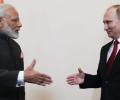
"We do not have any tight (military) relations with Pakistan," Putin said.

'It is in the interest of both sides that the visit of the US President is seen as being successful. Both sides have invested considerable political capital in it. This rapid exchange of visits and the decisions taken have to be justified, beyond the symbolism, which is no doubt important in itself. This opportunity to impart a fresh momentum to ties should not be missed,' says former foreign secretary Kanwal Sibal.
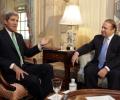
Pakistan Prime Minister Nawaz Sharif continues his exhortation for US mediation in Kashmir, and harks back to his meeting with former Prime Minister Atal Bihari Vajpayee when the latter had agreed to a resolution of Kashmir imbroglio; senior us officials assert there is 'absolutely no change in us policy' that Kashmir has to be resolved bilaterally. Aziz Haniffa reports.

'Notwithstanding the realisation among the Indian leadership to build up its navy for the force's expanding role, the Indian Navy was allocated only 15% of the interim defence budget presented in Parliament in February 2019.' 'The outlay for the navy's capital acquisition is not even adequate to meet its committed liabilities,' points out Brigadier S K Chatterji (retd).

Making it easier to do business is a key element of our strategy, says Foreign Secretary S Jaishankar.
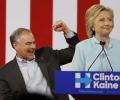
Rediff.com reproduces this 2014 interview with Tim Kaine where in he discusses the new opportunities to foster Indo-US trade and the improvement in ties.

Text of PM Narendra Modi's press statement after delegation level talks with US President Obama at the Hyderabad House in Delhi.

'Ensuring through diplomatic means and in conjunction with strategic partners that India will not be required to fight a simultaneous two-front war with China and Pakistan.' Brigadier Gurmeet Kanwal (retd) lists what India must have in its national security strategy.

Backing India's concerns over the slow pace of progress in the 26/11 case in Pakistan, United States President Barack Obama on Thursday asked Prime Minister Nawaz Sharif why the trial of Mumbai attackers has not started.

'The India-France relationship has been that of the elites of two countries, who appreciate each other's philosophical traditions -- whether it is ancient Indian civilisation and Sanskrit texts or the French tradition of Rene Descartes, Albert Camus, (Jean-Paul) Sartre... This is a drawback. It doesn't create the buzz, the excitement necessary for a relationship. We need more people-to-people contact, especially among students,' says former Ambassador to Paris, Rakesh Sood.

The target of $500 billion in bilateral trade by 2020 is doable, feels Anand Sharma.

The two countries also asked all nations to stop cross-border movement of terrorists and asserted that a decisive collective response from the international community without 'double standards and selectivity' was required to combat the threat of terrorism.
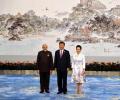
'By crudely dragging the topic into the bazaar to flog it for momentary pleasure, we turned it into a dead carcass by the time Modi even got back from Xiamen,' says Ambassador M K Bhadrakumar.

Prime Minister Narendra Modi on Friday said his government has carried out major reforms -- including labour reforms and reforms in insurance and defence sectors -- 'in less than 100 days' and stopped reversals Indian economy had been facing.

'Xi Jinping got a dose of Modi's medicine inside the tent where he was being hosted on the banks of the Sabarmati river.' 'Modi reportedly told him, looking deep into his eyes: "This was not expected of your country. Can you tell me when the troops are withdrawing?".'

'The US wants Modi to succeed because we want India to succeed. For our part, when India thinks of its partners in the world, we want it to think of the US first. That means positioning our country as the preferred provider of the key inputs that can help to propel India's rise.' 'The meeting between Modi and Obama is, and must be, an opportunity for true strategic dialogue -- not a scripted exchange of talking points, but an open discussion of the big questions. What kind of world do we want to live in? What are our true priorities? And most importantly, why does this partnership still matter?'

Asked if the relationship has achieved its full potential, the President replied, "Absolutely not."

Describing Bodh Gaya as the "land of enlightenment", Prime Minister Narendra Modi has said his government would develop the site as the spiritual capital for it to serve as a civilisational bond between India and the Buddhist world.
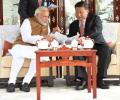
'Till today, we don't know what PM Modi discussed with Xi Jinping and Vladimir Putin, but we have been told that the relations have been reset.' 'We have no evidence from China to show that anything has changed, even though India had made several gestures in preparation for Wuhan,' says Ambassador T P Sreenivasan.
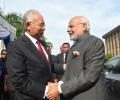
Both countries will advance maritime security and strengthen disaster response in the region, says Modi.
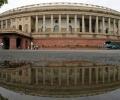
A reformed Planning Commission should reflect the diversity of Indian debate.

'If the US-Pakistan relationship continues to suffer, Pakistan may feel it has less to lose and decide that it need not keep a leash on LeT in order to appease America.' 'A tougher US policy toward Pakistan could lead to an emboldened and strengthened LeT and JeM, resulting in more terrorist attacks in India.'

'Xi Jinping is keen that the second Trump-Kim summit happens soonest.' 'Kim is reported to have told Xi that he expects to achieve a result from a second summit that the international community would welcome,' points out Dr Rajaram Panda.

Donald Trump is believed to be the first US President or President-elect to have spoken to a Taiwanese leader since 1979, when the US severed diplomatic ties with Taiwan after its recognition of the People's Republic of China, points out former RA&W officer Jayadeva Ranade.
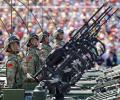
'Whether it is the One Belt One Road project or building relationships in the Indian Ocean Region -- supposedly our area of concern -- the Chinese are seriously outpacing us,' points out Vice-Admiral Premvir Das (retd).

'Both Modi and Xi know that if all that there is to show for Modi's visit -- barely eight months after Xi's India trip -- is a repeat of the same old declarations, there will be a terrible sense of letdown in the public mood resulting in future summits losing credibility. Only the possibility of new ground being broken can justify Modi's trip at this time,' says B S Raghavan.

'We are completely engaged in fighting poverty; alas, our neighbour Pakistan seems only engaged in fighting us.'

Prime Minister Narendra Modi's Nepal visit was an eye-opener for most Indians, as it appears as though the hard feelings of 17 years of neglect by Indian PMs has been overcome by this single, sincere visit, says Rajeev Srinivasan.
'For a long time Pakistan dreamt that India would break up and that it would be the predominant power in the region,' says Colonel Anil A Athale (retd).
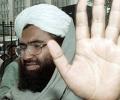
"My impression is that India can expect cooperation from China on the issue of declaring Masood Azhar, leader of JeM, as terrorist who should face trial in India, if India in the UN concentrated more on him than seeking to censure Pakistan as a sponsor of terror," Swamy said.

'We use the word "historic" perhaps too much, but the prime minister's visit certainly was historic in so many ways.'

Chinese President Xi Jinping's visit to India is a time for the two countries to get away from the haze of rhetoric and stale euphoria, says Sana Hashmi.
'It is very much a danger.' 'With Tibet following the India tradition of ahimsa and the global visibility of the Dalai Lama who embodies these values, he should be supported by India as a diplomat.' 'It would be in India's self-interest and instead of being embarrassed about his presence, India should recognise this (role).' 'By appeasing China, India does not get anything in return; they (the Chinese have not stopped) claiming Arunachal, part of Kashmir, etc.'

The Indian Spring represented by Anna Hazare's anti-corruption campaign, which has culminated in the Aam Aadmi Party's impressive electoral debut in New Delhi, began around the same time as the Arab Spring in 2011 but they led to different outcomes in India and the Arab world, says Ramesh Ramachandran.
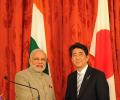
'Secretiveness and the element of surprise in announcing decisions marks the Modi style of diplomacy. From being a voluble politician, he became a reticent statesman... But the diplomatic dance is performed on thin ice and his adroitness is still to be proved,' says Ambassador T P Sreenivasan.

'Modi's promise of change during the election campaign was on the domestic front, but his first year in office focused on foreign policy beyond all expectations,' says Ambassador T P Sreenivasan.

The Japanese prime minister's visit to the memorial in Hawaii, the spot that was bombed 75 years ago, shows that it is possible for two powerful former enemies to transcend recriminatory impulses, observes Rajaram Panda.

To mark his 50th death anniversary, rediff.com has launched a special series to evaluate Jawaharlal Nehru's legacy.
 © 2026 Rediff.com - Advertise with us - Disclaimer - Privacy Policy - Sitemap - Feedback - About us - Terms of use - Grievances